Remembering the Uganda Martyrs: A Legacy That Lives On
Every year on 3rd June, Uganda becomes the center of one of Africa’s largest religious gatherings as pilgrims from across the continent and beyond converge at Namugongo to honor the Uganda Martyrs. Their story is more than a religious account; it is a powerful narrative of courage, conviction, sacrifice, and the enduring human spirit.
For many visitors, learning about the Uganda Martyrs offers a deeper understanding of Uganda’s history, culture, and spiritual heritage. Their legacy continues to shape the nation’s identity and has transformed Uganda into a significant destination for religious tourism.
The Historical Background
In the late 19th century, the Kingdom of Buganda was one of the most powerful kingdoms in East Africa. During this period, Arab traders, European explorers, missionaries, and merchants introduced new ideas, religions, and influences to the kingdom.
Christian missionaries began arriving in Buganda in the late 1870s. Members of the royal court and many young pages serving at the palace quickly became interested in Christianity. As more converts embraced the faith, tensions emerged between traditional authority and the growing influence of Christian teachings.
At the center of this conflict was Kabaka Mwanga II, who ascended to the throne in 1884. Concerned about the increasing influence of Christianity and foreign powers within his kingdom, Mwanga viewed the new religion as a challenge to his authority.
The Martyrs’ Stand for Their Faith
The young converts who became known as the Uganda Martyrs served in various roles within the royal court. Many were teenagers and young adults entrusted with responsibilities in the palace.
As Christianity spread, converts began adopting values and beliefs that sometimes conflicted with the expectations of the royal court. When ordered to abandon their faith, these young men refused.
Their steadfast commitment came at a tremendous cost. Between 1885 and 1887, dozens of Christians were executed for their beliefs. Some were beheaded, while others were burned alive at Namugongo.
Among the most well-known martyrs were:
- Saint Charles Lwanga
- Saint Kizito
- Saint Andrew Kaggwa
- Saint Denis Ssebuggwawo
- Saint Mukasa Balikuddembe
Despite facing persecution and death, they remained committed to their beliefs, becoming symbols of extraordinary faith and courage.
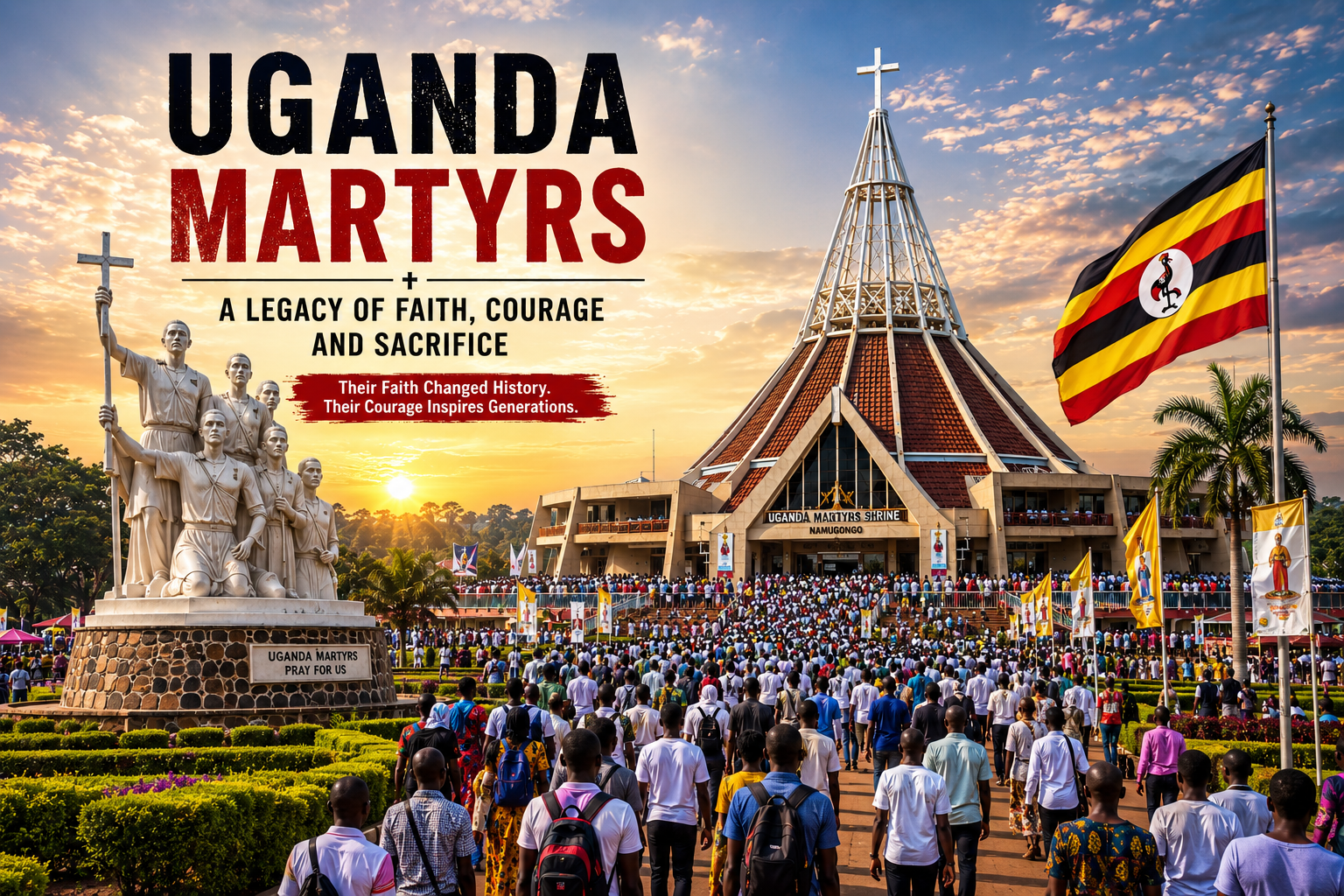
The name Namugongo holds special significance in Uganda’s religious history. It was here that many of the martyrs met their deaths, and today it stands as one of the most important pilgrimage sites in Africa.
Two major shrines commemorate the martyrs:
- The Uganda Martyrs Catholic Shrine Namugongo
- The Namugongo Anglican Martyrs Shrine
The Catholic Shrine is renowned for its striking architecture, designed to resemble a traditional African hut. The shrine features beautiful gardens, prayer areas, a lake, and exhibits that tell the story of the martyrs.
The Anglican Shrine, located nearby, commemorates the Anglican martyrs and serves as another important center of worship and remembrance.
Together, these sites attract visitors throughout the year seeking spiritual reflection, historical knowledge, and cultural understanding.
The Growth of Christianity in Uganda
Ironically, the executions that were intended to suppress Christianity helped accelerate its growth.
The courage displayed by the martyrs inspired many people throughout Buganda and beyond. Their story spread rapidly, and Christianity continued to expand across Uganda.
Today, Uganda is home to one of the largest Christian populations in Africa. Churches, schools, hospitals, and community organizations founded on Christian values continue to contribute significantly to national development.
Many historians regard the sacrifice of the Uganda Martyrs as a turning point in the history of Christianity on the African continent.
Martyrs Day: Africa’s Largest Pilgrimage Event
Every year on 3rd June, Uganda hosts one of Africa’s largest annual religious pilgrimages.
Pilgrims travel from:
- Uganda
- Kenya
- Tanzania
- Rwanda
- South Sudan
- Democratic Republic of the Congo
- Other countries around the world
Many undertake journeys on foot that last several days or even weeks. Walking hundreds of kilometers becomes both a physical challenge and a spiritual act of devotion.
As pilgrims approach Namugongo, roads fill with worshippers singing hymns, praying, and sharing stories of faith. The atmosphere is one of unity, gratitude, and celebration.
Canonization and International Recognition
The significance of the Uganda Martyrs extends far beyond Uganda’s borders.
On 18 October 1964, Pope Paul VI canonized the 22 Catholic martyrs, declaring them saints of the Catholic Church.
This historic event was especially important because it highlighted Africa’s contribution to the global Christian faith. The canonization drew worldwide attention to Uganda and established the Uganda Martyrs as internationally recognized symbols of faith and sacrifice.
Today, pilgrims and tourists from Europe, North America, Asia, and other parts of Africa visit Namugongo to learn about their story.
The Uganda Martyrs and Tourism
The Uganda Martyrs have become a cornerstone of Uganda’s religious and cultural tourism sector.
Visitors to Namugongo can experience:
- Historical and religious heritage sites
- Guided tours explaining the martyrs’ story
- Beautiful architecture and memorial monuments
- Pilgrimage activities and spiritual retreats
- Cultural interactions with local communities
For tour operators and travel planners, the Uganda Martyrs sites offer a unique opportunity to combine faith-based tourism with broader cultural and historical experiences in Uganda.
Many visitors also combine a Namugongo tour with visits to other attractions around Kampala and Entebbe, creating a well-rounded cultural itinerary.
Lessons from the Uganda Martyrs
The story of the Uganda Martyrs continues to resonate because it speaks to universal values:
- Courage in the face of adversity
- Commitment to personal convictions
- Sacrifice for a greater purpose
- Integrity and moral strength
- Hope amid challenges
Their example reminds people around the world that true courage often comes from standing firm in one’s beliefs despite difficult circumstances.
Conclusion
More than a century after their deaths, the Uganda Martyrs remain among the most influential figures in Uganda’s history. Their sacrifice transformed the religious landscape of the nation, inspired millions of believers, and established Namugongo as one of Africa’s most significant pilgrimage destinations.
Whether viewed through the lens of faith, history, culture, or tourism, the story of the Uganda Martyrs is one of extraordinary courage and enduring legacy. Their witness continues to inspire generations, making their memory a cherished part of Uganda’s national heritage and a beacon of hope for people around the world.