
Africa’s Big Five are the continent’s most legendary wildlife species—and the reason travellers eagerly rise before dawn or head out at sunset for game drives. While animals like giraffes and zebras may be more visually striking, and cheetahs easier to spot than leopards, nothing compares to the thrill of encountering one of the Big Five roaming freely in the wild.
Seeing these iconic animals in their natural habitat remains at the very top of most safari travellers’ bucket lists.
What Does “The Big Five” Mean?
The term Big Five dates back to the 18th and 19th centuries and was originally coined by big-game hunters. It referred to the five most dangerous animals to hunt on foot in Africa:
- African Elephant
- Cape Buffalo
- African Lion
- Leopard
- Rhinoceros
Today, the meaning has shifted entirely. The Big Five are no longer hunted—they are protected symbols of Africa’s natural heritage. Modern safari tourism directly supports conservation efforts, helping combat threats such as poaching, wildlife trafficking, habitat destruction, and human encroachment.
When Is the Best Time to See the Big Five?
The best safari season across East Africa runs from July to October, during the cool, dry months.
Why this period is ideal:
- Thinner vegetation makes animals easier to spot, especially elusive species like leopards that spend much of their time in trees.
- Limited water sources force animals to gather around major rivers and channels, increasing wildlife sightings.
- Large herbivores such as elephants and buffalo migrate toward permanent water sources.
Notable wildlife hotspots during this season include:
- River Nile – Murchison Falls National Park
- Kazinga Channel – Queen Elizabeth National Park
- Mara River – Maasai Mara
- Grumeti River – Serengeti
Where Are the Best Places to See the Big Five in East Africa?
While the Big Five are spread across Africa, the following destinations offer the best chances of seeing all five, sometimes even in a single day:
- Ngorongoro Crater (Tanzania) – Home to over 30,000 animals within a collapsed volcanic caldera
- Serengeti National Park (Tanzania)
- Maasai Mara Game Reserve (Kenya)
- Murchison Falls National Park (Uganda)
- Queen Elizabeth National Park (Uganda)
- Kidepo Valley National Park (Uganda)
Meet the Members of Africa’s Big Five
African Elephant (Loxodonta africana)
The largest land animal on Earth, African elephants can grow up to 3 metres tall. Adult males often live solitary lives, while females move in close-knit family groups led by a matriarch. Despite their gentle reputation, elephants can be extremely dangerous when threatened and play a massive role in shaping ecosystems.
African Cape Buffalo (Syncerus caffer)
Often considered the most dangerous of the Big Five, buffalo are highly protective and unpredictable. They move in large herds and are known to charge when threatened. Their grazing habits shape savannah landscapes, making them a keystone species.
Leopard (Panthera pardus)
Elusive, solitary, and highly intelligent, leopards are the hardest of the Big Five to spot. They hunt mainly at night and are masters of camouflage. Early mornings and late evenings offer the best chance to see one resting in trees or dense vegetation.
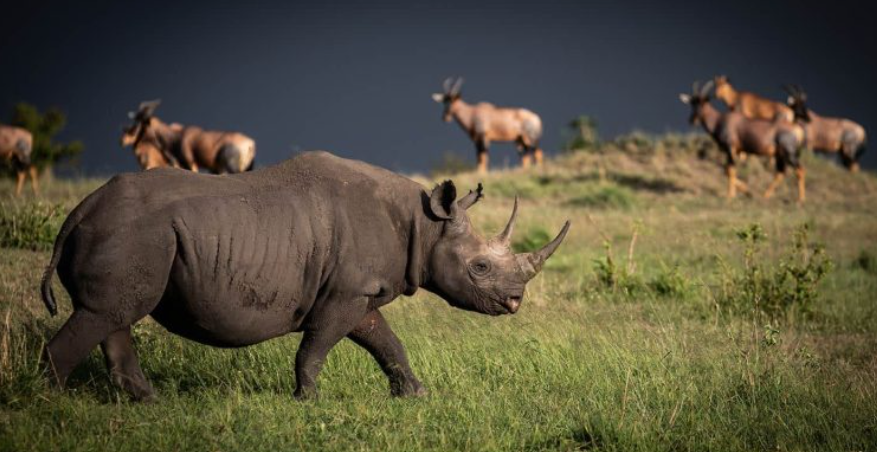
Rhinoceros (Diceros bicornis & Ceratotherium simum)
Rhinos are among Africa’s most endangered animals. There are two species:
- White Rhino – Larger, with a wide mouth adapted for grazing
- Black Rhino – Smaller, with a pointed lip for browsing leaves
Even spotting a rhino from a distance is considered a rare and special safari moment.
African Lion (Panthera leo)
Known as the king of the jungle, lions are Africa’s top predators. They live in prides, usually made up of up to 12 individuals. While males are easily identified by their manes, it is the females who do most of the hunting. Lions play a critical role in controlling herbivore populations.
Why the Big Five Matter to the Ecosystem
The Big Five are not defined by size alone—but by their ecological impact.
Carnivores: Lions & Leopards
These predators sit at the top of the food chain. Their presence:
- Controls herbivore populations
- Prevents overgrazing
- Maintains strong genetic lines by removing weaker animals
Without predators, ecosystems suffer from overpopulation, inbreeding, and eventual starvation.
Herbivores: Elephants, Buffalo & Rhinos
These animals are ecosystem engineers.
- Elephants are often called environmental stylists. In Uganda’s Murchison Falls and Kidepo Valley National Parks, elephants have helped spread Borassus palm trees by consuming palm fruits and dispersing seeds through their dung.
- Buffalo and rhinos are bulky feeders that consume tall, low-quality grass, allowing shorter, nutrient-rich grass to flourish—benefiting antelopes and other grazers.
However, when present in extremely large numbers, their trampling and grazing can also transform landscapes dramatically.
Experience the Big Five with Adventrip
East Africa remains one of the world’s best regions to experience the Big Five in their natural habitats. From Uganda’s remote wilderness to the vast plains of Kenya and Tanzania, each safari offers a unique and unforgettable encounter with Africa’s most iconic wildlife.
At Adventrip, we design safari experiences that bring you closer to these legends—responsibly, sustainably, and memorably.
By ysa