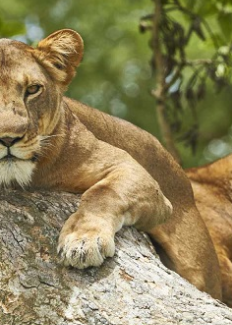
Seeing a lion stretched across a tree branch feels almost unreal. Lions are known for roaming the savannah, not relaxing in treetops. Yet in Uganda, this rare sight is one of the most exciting wildlife experiences you can have on safari.
In the southern Ishasha sector of Queen Elizabeth National Park, lions have developed a remarkable behavior that draws travelers from around the world: they climb trees.
Let’s explore why this happens, what makes these lions special, and why this safari experience belongs on your travel bucket list.
The Rare Tree-Climbing Lions of Ishasha
Tree-climbing lions are extremely rare. A few populations exist in Africa, but the Ishasha lions are among the most famous and easiest to spot.
During a game drive in this remote part of the park, it’s common to see:
- Lion cubs balancing playfully on branches
- Lionesses stretched along wide tree limbs
- Huge males with distinctive dark manes resting above the grasslands
This behavior looks surprising, but it has become a defining feature of safaris in southern Uganda.
Why Do Lions Climb Trees?
There isn’t just one reason. It’s a combination of survival, comfort, and strategy.
A Perfect Hunting Viewpoint
From the top of fig and acacia trees, lions can watch prey move across the savannah without being noticed. Animals rarely look up, giving lions a major advantage when planning ambushes.
Escape from the Heat
Savannah temperatures can get very hot, especially during midday. Elevated branches provide shade and a cool breeze, making trees the perfect resting place during the hottest hours.
Shelter from Rain
During rainy seasons, the ground becomes damp and muddy. Trees offer a dry platform where lions can rest comfortably.
Protection from Insects
Tsetse flies and biting insects are a constant nuisance in the grasslands. Climbing higher reduces exposure to these pests.
A Safe Resting Spot After Hunting
After feeding, lions need long periods of rest to digest. Wide fig tree branches act like natural beds, allowing them to relax safely away from disturbance.
Why Ishasha Is the Perfect Habitat for Tree-Climbing Lions
Not every lion population climbs trees. Ishasha provides the perfect conditions for this unusual behavior to develop.
Abundant Prey
The plains are home to Uganda kob, antelope, and other grazing animals, providing a reliable food source for lion prides.
Ideal Trees
The region is rich in fig and acacia trees with strong, wide branches capable of supporting adult lions.
Vast Open Landscapes
Large open spaces allow lions to move freely and establish territories. Over time, these environmental conditions encouraged lions to adopt tree climbing as a regular habit.
What Makes These Lions Unique?
One striking feature often noticed by visitors is the dark mane of many male lions in this region. Seeing a pride of lions above you instead of in the grass completely changes the safari experience. It feels unexpected and unforgettable.
Conservation Challenges Facing the Tree-Climbing Lions
Despite their fame, these lions face real threats.
Human–Wildlife Conflict
As communities grow around the park, conflicts sometimes arise when lions prey on livestock. In the past, poisoning incidents have tragically affected lion populations.
Natural Population Decline
Disease, old age, and injuries are part of life in the wild and naturally reduce lion numbers.
Territorial Fights
Battles between dominant males for control of prides can result in fatalities.
Conservation programs and park protection efforts continue to safeguard these iconic animals.
Why You Should Add This Experience to Your Safari Bucket List
Imagine driving through the savannah and suddenly spotting a lion stretched across a tree branch above your vehicle. Cameras click. Everyone goes silent. It’s a moment you never forget.
Tree-climbing lions offer:
- Incredible photography opportunities
- Rare wildlife behavior seen in few places worldwide
- A safari story unlike any other
If you want a truly unique African safari, the Ishasha sector delivers an experience that stands apart.