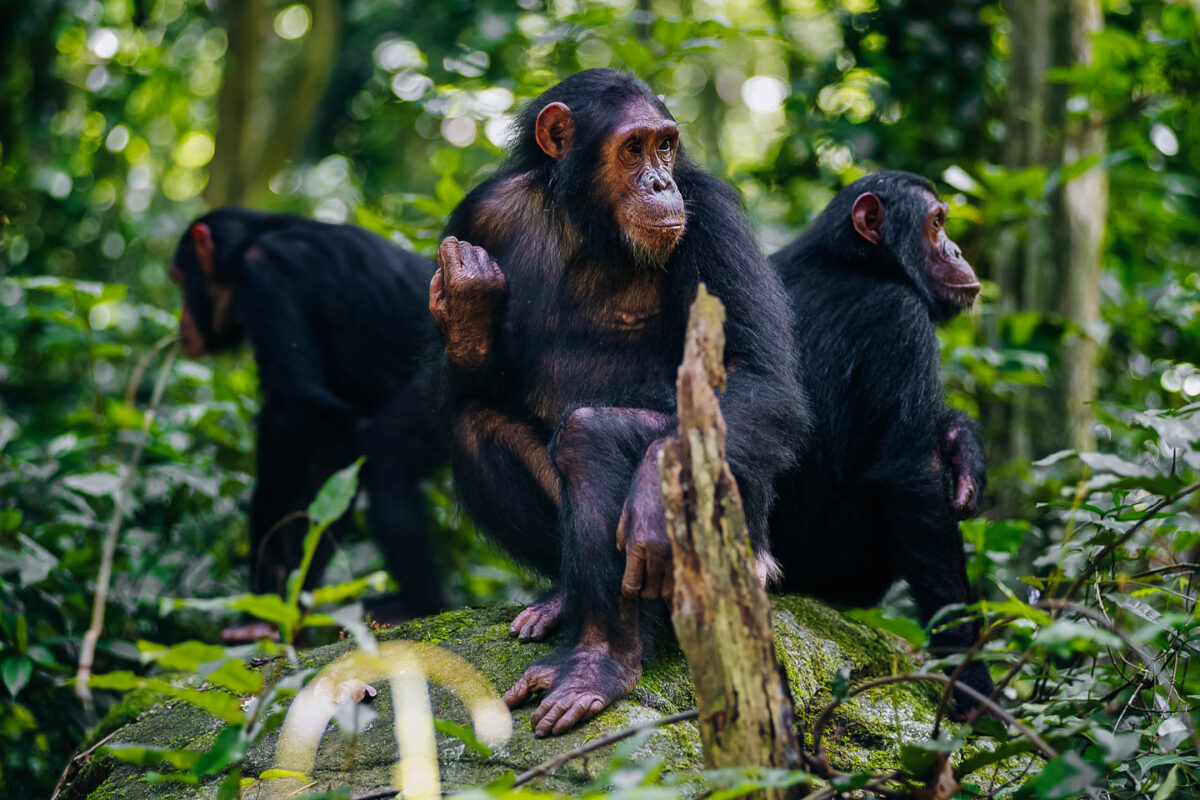
Even as ongoing shifts in chimpanzee social structures continue to attract scientific attention, particularly within well-studied communities such as those in the Kibale ecosystem
Uganda remains one of the most rewarding and authentic chimpanzee trekking destinations on the planet.
Rather than diminishing the experience, these natural behavioral changes highlight the intelligence, complexity, and adaptability of chimpanzees. For visitors, they add a deeper layer of meaning to every trek, turning each encounter into a living lesson in primate behavior and conservation science.
What remains constant is Uganda’s exceptional natural beauty, thriving forests, and strong conservation framework that ensures chimpanzee trekking is both safe and sustainable.
Uganda: A World-Class Destination for Chimpanzee Trekking
Uganda has earned global recognition as one of Africa’s premier primate tourism destinations. Its combination of dense tropical forests, rich biodiversity, and well-managed conservation areas makes it ideal for chimpanzee trekking experiences.
Across the country, visitors can explore multiple chimpanzee habitats, each offering a distinct ecological setting and trekking experience.
Kibale National Park: The Primate Capital of the World
Kibale National Park is widely regarded as the “primate capital of the world,” thanks to its exceptionally high density of chimpanzees.
The park offers one of the most reliable chimpanzee tracking experiences in Africa, with habituated communities that allow visitors to observe natural behaviors such as feeding, grooming, and social interaction.
This is also one of the key research landscapes where long-term chimpanzee studies are conducted, offering insights into group dynamics, leadership structures, and intergroup relations—especially within well-documented communities in the broader Kibale ecosystem.
For travelers, Kibale delivers an immersive, high-success-rate chimpanzee trekking experience in a lush rainforest environment.
Budongo Forest Reserve: Ancient Forest, Powerful Encounters
Budongo Forest Reserve is one of Uganda’s largest and oldest tropical forests, known for its towering mahogany trees and rich biodiversity.
Chimpanzee trekking here often takes place in semi-open forest sections, making sightings relatively easier compared to denser jungle environments.
Budongo offers a peaceful and less crowded experience, ideal for travelers who prefer a quieter and more intimate connection with nature.
Kyambura Gorge: The “Valley of Apes”
Kyambura Gorge presents one of Uganda’s most dramatic landscapes—a deep rainforest hidden within the savannah plains of Queen Elizabeth National Park.
Chimpanzee tracking here is more challenging due to the terrain and wider ranging movements of the chimpanzees, but the reward is a truly unique ecological experience.
The contrast between open savannah and enclosed forest makes Kyambura one of the most visually striking chimpanzee trekking locations in Africa.
Kalinzu Forest Reserve: Uganda’s Hidden Gem
Kalinzu Forest Reserve is a lesser-known but highly rewarding chimpanzee trekking destination.
With a healthy chimpanzee population and fewer tourists, Kalinzu offers an authentic forest experience that feels untouched and intimate.
It is ideal for travelers seeking off-the-beaten-path encounters with primates and a deeper immersion into Uganda’s natural environment.
Understanding Changing Chimpanzee Social Dynamics
Chimpanzees are highly intelligent and socially complex animals. Their societies naturally evolve over time due to:
- Changes in leadership within groups
- Competition for territory and resources
- Natural population shifts
- Long-term ecological pressures
- Intergroup interactions
Recent observations in some research areas—including well-documented chimpanzee communities in Uganda—have shown that these dynamics can shift in visible ways over time.
However, these changes are not a cause for concern for visitors. Instead, they reflect the richness of chimpanzee behavior and the value of long-term wildlife research.
Every trekking experience becomes unique, shaped by the unpredictable and dynamic nature of wild primate societies.
Is Chimpanzee Trekking in Uganda Still Safe?
Yes. Chimpanzee trekking in Uganda remains safe, professionally managed, and highly regulated.
All trekking activities are:
- Led by trained Uganda Wildlife Authority rangers
- Conducted under strict conservation guidelines
- Designed to minimize disturbance to chimpanzees
- Structured to ensure visitor safety at all times
Uganda’s conservation model ensures that both wildlife protection and tourism experiences are balanced effectively.
Why Uganda Remains a Top Global Chimpanzee Destination
Despite ecological and behavioral changes within chimpanzee populations, Uganda continues to stand out globally because of:
- High chimpanzee population density
- Multiple trekking destinations in one country
- Strong conservation and research programs
- Reliable and guided trekking systems
- Rich biodiversity beyond chimpanzees
This makes Uganda not just a destination for wildlife viewing, but a complete primate experience.
The Future of Chimpanzee Tourism in Uganda
The future of chimpanzee trekking in Uganda is deeply tied to conservation, research, and sustainable tourism.
As forest ecosystems continue to evolve, so too will chimpanzee behavior. This ongoing natural process ensures that every visit remains unique, educational, and impactful.
Uganda’s commitment to protecting these habitats guarantees that future generations will continue to experience chimpanzees in their natural environment.